Farm Animals Activities: Trace & Color for Classroom Fun
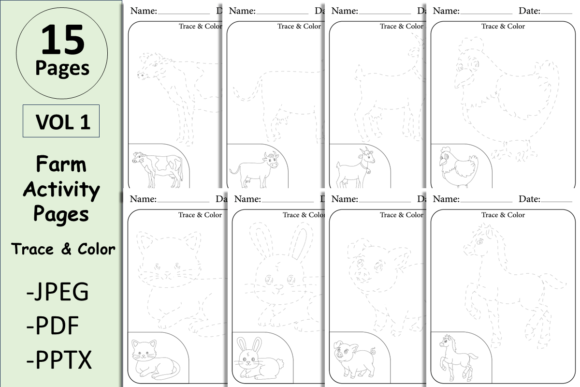
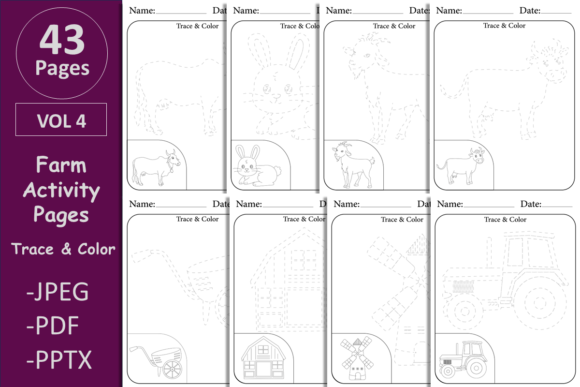
If you work in education, childcare, or content creation, you know that finding resources that are both engaging and genuinely educational can feel like searching for a needle in a haystack. We often see coloring pages that are just time-fillers, and worksheets that are too dry to hold a child’s attention. However, the Farm Animals Activities: Trace & Color collection strikes a rare balance. It combines the tactile joy of coloring with the foundational skill of tracing, all wrapped in a cohesive farm theme. This isn't just a stack of pictures; it is a curated set of 43 high-resolution pages designed to help young learners master shapes, sharpen their memory, and develop critical thinking skills through observation.
Visual Style and Educational Appeal
The visual personality of this collection is clean, approachable, and pedagogically sound. The illustrations utilize bold, distinct outlines which are essential for developing fine motor control. Unlike overly complex adult coloring books that can frustrate younger users, or babyish designs that bore older students, this set hits the "Goldilocks" zone. The style encourages spatial awareness and visual perception. When a child traces the outline of a tractor or a pig, they are not just making a line; they are training their hand-eye coordination and learning how to construct the fundamental shapes that make up complex objects. For the adult user—whether a parent, teacher, or designer—this means you are providing a tool that respects the user's intelligence while offering a fun, creative outlet.
Practical Applications for Educators and Parents
One of the standout features of the Farm Animals Activities pack is its versatility. In a design context, we often talk about "modularity," and this collection offers that same flexibility for lesson planning. It is not limited to one specific hour of the day. Because the files are provided in multiple formats (JPG, PDF, and PowerPoint), they integrate seamlessly into various workflows.
Here are some practical ways to deploy these assets in your environment:
- Morning Work & Warm-ups: Use the tracing sheets as a calm, focused activity to settle students into the day. It helps transition their brains from "home mode" to "learning mode" without the pressure of a high-stakes assignment.
- Thematic Integration: If you are running a unit on biology, nature, or community helpers, these pages serve as excellent supplementary materials. They reinforce the lesson on agriculture and animal husbandry while practicing pre-writing skills.
- Homeschooling Flexibility: For homeschool parents, this is a lifesaver for "time fillers" or brain breaks. It allows for independent learning where the child can focus on coloring while you prepare the next lesson.
- Fast Finishers: We all have students who finish assignments quickly. Having a stack of high-quality, educational coloring pages prevents downtime and keeps those creative gears turning.
Developing Critical Skills Through Creativity
It is easy to dismiss coloring as "just fun," but from a developmental standpoint, this collection is a powerhouse for cognitive and motor skill enhancement. The act of tracing specifically targets pre-reading skills. By following the dotted lines to create the shape of a cow or a fence, children learn to track movement from left to right—a crucial skill for reading text later on.
Furthermore, the Farm Animals Activities set encourages problem-solving. When a child decides which colors to use or how to stay inside the lines of a complex piece of farming equipment, they are making decisions and exercising judgment. The inclusion of farming tools alongside animals broadens the scope, teaching children about the inanimate objects that support the ecosystem. This variety enhances visual perceptual skills, helping kids distinguish between different types of objects and their functions.
File Formats and Technical Usability
From a technical perspective, the creators of this pack have considered the end-user experience. The inclusion of 43 High-resolution JPG images (8.5 x 11 inches) ensures that prints come out crisp and professional, without the pixelation often seen in free, low-quality resources.
However, the inclusion of the PowerPoint file is a game-changer for modern educators. It allows you to project a page onto a smartboard for a class-wide activity or easily rearrange the order of the pages to fit your specific curriculum. The PDF file ensures that formatting remains consistent across different devices and printers. This attention to file delivery mirrors the professionalism you would expect from premium design assets, making it a reliable resource for commercial settings like tutoring centers or after-school programs.
Integrating This Resource Into Your Brand or Business
If you are a content creator, blogger, or small business owner in the education niche, resources like the Farm Animals Activities collection can add immense value to your offerings. You can use these pages as a "lead magnet"—a freebie offered to your audience in exchange for an email address. Because the content is practical and solves a real problem (keeping kids busy and educated), it has a high perceived value.
Consider how you can pair these visual assets with your existing content. If you write about homeschooling, you can frame these worksheets as a "secret weapon" for busy days. If you run a daycare, you can showcase the variety of activities to parents, demonstrating your commitment to well-rounded, creative education. The style of the illustrations is neutral enough to fit almost any brand identity, yet specific enough to be instantly recognizable as a farm-themed educational tool.
Ultimately, the Farm Animals Activities: Trace & Color collection is more than just a set of worksheets. It is a versatile toolkit for developing critical thinking, motor skills, and creativity. Whether you are printing them out for a rainy Tuesday afternoon or using them as part of a structured lesson plan, they offer a professional, engaging solution that respects both the learner and the facilitator.